
Perseids meteor shower to follow just hours after partial solar eclipse in Northern Ireland
Skywatchers in Northern Ireland could be in for a double astronomical treat on Wednesday with not only a deep partial solar eclipse but also the peak of the Perseid meteor shower.
The Perseids, a favourite shower for most observers, peaks on the night of August 12 / 13 when there's a new moon, which experts say is an ideal condition.
"There is no connection - just a happy coincidence!” said Terry Moseley of the Irish Astronomical Association.
Meteors are tiny particles of dust and small grains of rock that are left behind in the path of a comet as it orbits the sun. The Perseids come from a comet called Swift-Tuttle, after its two discoverers.
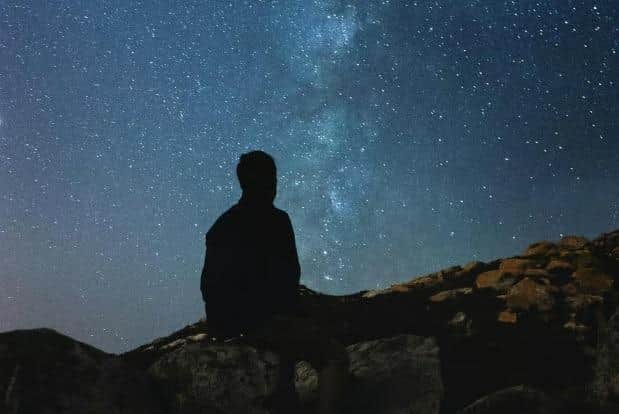

"We don't see the particles themselves, as they are much too small; what we see is the flash of light given off as they burn away and ionize air molecules when they collide at very high speed with the Earth's atmosphere,” said Mr Moseley.
" Most burn away at a height of about 80 - 100 km in the upper atmosphere, but bigger ones can penetrate a bit lower before finally burning up. Believe it or not, the brighter ones are only the size of a grape pip, and a really bright one would be only the size of a pea!
"They can be seen in any part pf the sky, but if you trace their paths backwards, they will appear to come from the constellation Perseus, which is how they get their name. Perseus will be rising in the NE part of the sky as it gets dark, and it then gets higher and higher up as it gets later, which gives a higher number of meteors.
"You can get an app for your phone which will show you where Perseus is at any given time.”
Skywatchers are advised that to see the most meteors, they need to be well away from bright artificial lights.
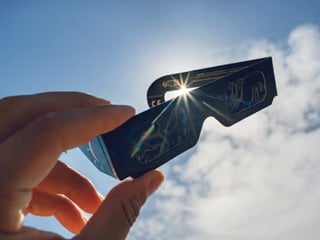
"The best direction to look is about 40 - 50 degrees on the side of Perseus, and at a similar height above the horizon, as long as that's in a dark clear part of the sky. That's about half of a right-angle, as a rough guide,” said Mr Moseley.
Read more: Solar eclipse in Northern Ireland: When to see it and how to experience it safely
“Meteors are best seen with the naked eye. Use a lounger or a reclining chair for comfort, and allow at least 10 minutes for your eyes to adjust to the dark before you can see any but the brightest ones.
"You can try to get photos with a phone camera, but it's a matter of luck - the meteor will be gone before you can press the shutter! So just prop the camera up pointing at the sky, in night mode, and set it to take a series of exposures each as long as possible, and hope for the best - but you'll be lucky to image even one. The best advice is - just look, and enjoy the free show.
"Under good conditions, you might see about 100 Perseids per hour.”
The best time to see the Perseids is between midnight and 5.30am.