
UUP: Prime Minister's stance on Palestine 'electoral' - but two state solution is essential
The government’s policy on recognition of a Palestinian state may be driven more by an electoral challenge from Jeremy Corbyn’s new party “than a genuine commitment to peace or Palestinian welfare”, the UUP deputy leader has said.
Robbie Butler has outlined the party’s position on Sir Keir Starmer’s announcement that the UK would recognise the territory as an independent state, if certain conditions weren’t met by Israel.
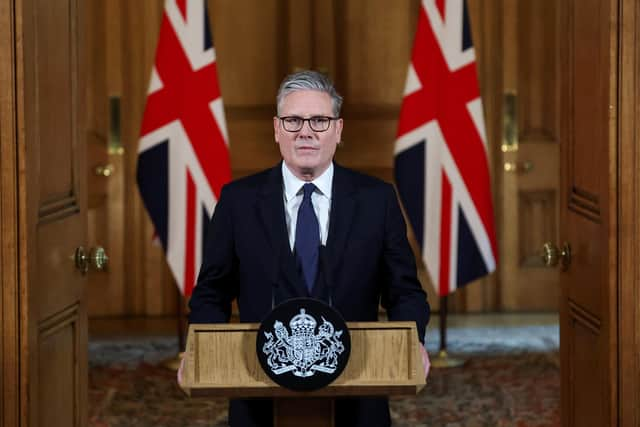

The UUP MLA says that a two-state solution is “essential” – and must be backed by both Israel and Palestine. Few western nations formally recognise the territories as a state, partly because they don’t have a single government.
Jihadist group Hamas controls Gaza, while only parts of the West Bank are controlled by the Palestinian Authority. Large parts of the would-be state are currently under Israeli military control.
Asked for the party’s response to the Prime Minister’s new policy on recognition of Palestine, Mr Butler said lasting peace will only be secured through an agreement that is “jointly constructed and respected by both Israel and Palestine” – and anything else risks deepening divisions in the region.
“It is, however, difficult to ignore the political timing of Sir Keir Starmer’s intervention. With Labour haemorrhaging members to Jeremy Corbyn’s new party, one could reasonably question whether this move is driven more by electoral calculations than a genuine commitment to peace or Palestinian welfare. The path to lasting peace cannot be reduced to a headline or a vote-winning tactic.
“No sustainable solution can emerge while hostages remain in captivity. The continued detention of civilians undermines the very essence of democratic legitimacy. Any government or group that engages in or condones such acts forfeits its standing in the international community and cannot be seen as a viable democratic partner”.
He added: “self-determination must come not from external threats or unilateral moves, but through dialogue, accountability, and above all, the will of the people.
“Real leadership means investing in peace that is deliverable, inclusive, and stable, not symbolic actions that risk entrenching further division.”