
High Court judge dismisses Orange Order’s challenge to Secretary of State’s Drumcree parade ban
The Secretary of State was legally entitled to ban the Orange Order’s flashpoint Drumcree parade, a High Court judge ruled on Wednesday.
Mr Justice Scoffield also rejected claims Chief Constable Jon Boutcher wrongly interfered in political issues by asking Sir Chris Bryant to step in. He dismissed a challenge by Orangemen in Portadown to the decision to prohibit them from marching down the town’s nationalist Garvaghy Road.
“The Secretary of State’s decision was lawful, and within the margin of discretion properly afforded to him, although it is highly regrettable that it was required in the circumstances in which it arose,” Mr Justice Scoffield held.
Sir Chris intervened earlier this month amid a deepening stand-off over the Parades Commission’s original determination to approve the contentious procession for the first time since 1998.
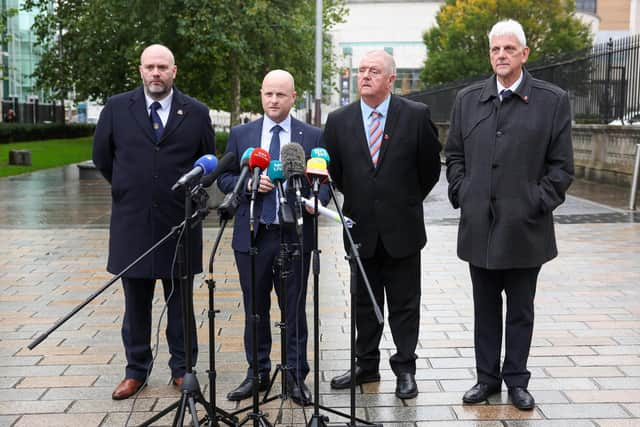

Members of the Portadown District Lodge had been given the go ahead for 35 participants to march back from Drumcree Church on Sunday, September 27. But they were prevented from completing the disputed route after hundreds of people, including Sinn Fein First Minister Michelle O’Neill and other political representatives, blocked the road.
By October 9, police believed all available, lawful and proportionate ways to facilitate completion of the parade had been exhausted.
According to the Chief Constable’s assessment, the only remaining option would require a substantial public order intervention considered disproportionate and with an unacceptable risk of serious injury and wider unrest spreading across Northern Ireland.
PSNI intelligence provided to the Secretary of State indicated dissident republicans almost certainly attended the protests, and possibly have ready access to firearms in the Garvaghy Road area.
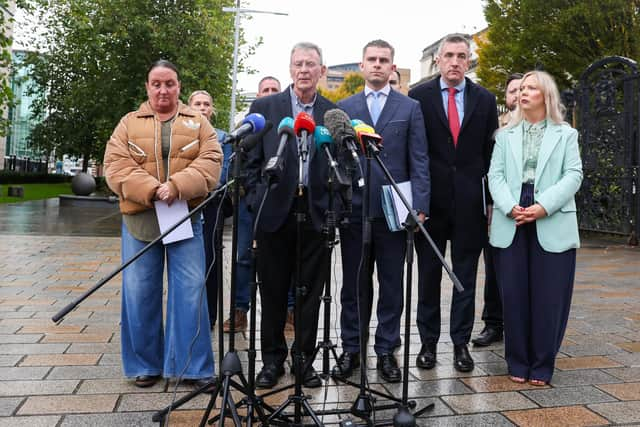
With the cost of the Drumcree policing operation rising above £5m, Mr Boutcher asked the Secretary of State to review the Parades Commission’s determination based on the potential for disorder. Sir Chris then decided it was not in the public interest for the march to go ahead.
Portadown Orangemen claimed the move, under powers contained within the Public Processions (Northern Ireland) Act 1998, was irrational, contradictory and in breach of their entitlement to freedom of expression and peaceful assembly under the European Convention on Human Rights.
Judicial Review
They had obtained a lawful determination which was then frustrated by unlawful conduct, their lawyers contended. In a widening challenge, a judicial review was also sought into the role played by the Chief Constable.
Counsel for a member of the District Lodge who took the case claimed he had become involved in factors outside the statutory remit of the PSNI. The intelligence assessment provided to the Secretary of State indicated mainstream republicans were concerned about their ability to prevent disorder or control dissident republicans.
The views expressed by a senior police commander about nine intelligence documents connected to the dispute were also revealed during the hearing.
He referred to the presence of dissidents, “the feelings of the Provisional IRA”, and the potential impact on the wider parading issue.
Local Orangemen claimed the Chief Constable had wrongly highlighted the “catastrophic consequences” for trust and confidence in policing, the Northern Ireland Executive and the peace process.
However, Mr Justice Scoffield instead found that the PSNI decided against mounting a large-scale operation to clear the Garvaghy Road for valid policing reasons.
“The potential political fall-out of a failed police operation to force the march through was plainly not a decisive factor in deciding that such an operation should not be attempted; nor in deciding that, in policing terms, the impasse had continued long enough,” he said.
The judge went on to rule that the Secretary of State correctly banned the parade to protect the public interest using powers available to him under Section 11 (of the Act).
Rejecting all grounds of challenge, he held that Sir Chris and Mr Boutcher took into account the obligation to seek to facilitate the procession in accordance with the Orangemen’s human rights.
“The Secretary of State was both entitled and obliged to take into account the wider implications of the dispute, rather than viewing it simply as a straight balancing exercise between the rights of the marchers and protesters,” Mr Justice Scoffield said.
“Seeking to facilitate the march by force would likely have resulted in serious and prolonged disorder, not limited to the immediate area of Portadown but extending elsewhere in Northern Ireland.”
Recognising Lodge members had acted peacefully and that the threat of disorder came from elsewhere, he held that the Secretary of State was right to conclude the proposed procession should be prohibited in the public interest, reflecting the interests of national security or public safety.
“Although the series of decisions made by the Secretary of State were complex, there was nothing unlawful or irrational about the way in which he resolved the issues before him,” the judge added. “The Secretary of State was entitled to, and did, take into account the factual picture which had developed since the Commission’s determination.”
As he dismissed the challenge, Mr Justice Scoffield stressed those who opposed the decision to allow the march should take “no particular joy” in the outcome.
“The Secretary of State’s decision was lawful but the position which has now been reached has been brought about at very significant cost to the people of Northern Ireland – financially, through the diversion of police resources, and in terms of community relations,” he concluded.
“Depressingly, the threat of serious and widespread disorder has loomed large in the matters under consideration.”
The judge acknowledged opposition to the Orangemen seeking to march along a route where they were neither wanted nor welcome.
“But the Convention case-law is clear that it protects freedoms of assembly and expression which others may find offensive or unwelcome,” he stated.
“The Lodge’s right to process along the notified route had been established, subject to conditions deemed appropriate by the Commission.
“As a result of the events of the following weeks, significant concerns have now been expressed about respect for the rule of law in this jurisdiction. That includes amongst some elected representatives, by reason of their participation in the unnotified protest.”